Residential & Commercial
Vastu Tortoise vs Feng Shui Tortoise: What's the Difference?
29 July 2026
388 Views
The tortoise shows up in both Indian and Chinese home traditions, though the reasoning behind it differs. In Vastu Shastra, the tortoise is linked to Lord Vishnu's Kurma avatar, the form he took to support Mount Mandara during the churning of the cosmic ocean. This is why the tortoise represents stability, endurance, and protection in Hindu households, and why it's often called kachua or kurma in Vastu contexts.
In feng shui, the tortoise is one of the Four Celestial Animals, alongside the dragon, phoenix, and tiger. It represents the Black Tortoise of the north a symbol of support, longevity, and steady progress and its effects are shaped by the material and the exact direction chosen, not the figurine alone.
Both systems read the tortoise as a symbol of a strong foundation, but they don't always agree on direction, material colour, or ritual. If you're decorating a home in India, it's generally cleaner to pick one system, Vastu or feng shui and follow it consistently, rather than mixing recommendations from both.
Where to Keep a Tortoise at Home According to Vastu
The North zone is the direction most Vastu sources recommend for a tortoise. It connects with Lord Kuber, the god of wealth, and is believed to support income and career stability. The Northeast (Ishanya), considered the most sacred corner of a home in Vastu Shastra, is the second major option favoured for spiritual growth, mental clarity, and general positivity.
Not every source agrees on a single "best" direction, and it's worth saying that plainly rather than hiding it. Some Vastu consultants recommend East or Southeast instead, tying the tortoise to the rising sun, family health, and steady growth rather than wealth specifically. Rather than chasing one universal rule, match the direction to your goal, exactly as you would with any other Vastu remedy.
Turtle Vastu Direction by Purpose
Your Goal | Recommended Direction | Why |
Career growth, income stability | North | Ruled by Lord Kuber, god of wealth |
Peace, spiritual clarity, general positivity | Northeast (Ishanya) | The most sacred zone in Vastu Shastra |
Health, longevity, new beginnings | East | Connected to the rising sun |
Family bonding, steady growth | Southeast | Favoured by some practitioners for grounding energy |
Relationship harmony | Southwest | Best with a crystal or wooden tortoise specifically |
A few placement rules apply no matter which zone you choose:
Keep the tortoise on a stable table, shelf, or altar rather than directly on the floor.
Avoid the south zone entirely, since its fire element works against the tortoise's water energy.
Do not place a tortoise in the bathroom, kitchen, or directly opposite the main entrance.
Clean the figurine regularly with a soft, dry cloth to keep its energy active.
If it sits near an aquarium or water bowl, change the water often so it stays fresh rather than stagnant.
Most Vastu guidance favours keeping a single tortoise figurine rather than several together, to avoid conflicting energies though a pair is sometimes recommended specifically to symbolise partnership. If you're choosing between the two, a single, well-placed figurine is the safer default.
Related Blog:
Can You Keep a Live Tortoise at Home? (Vastu View vs the Law)
This is one of the most searched questions on this topic, and it deserves a straight answer rather than a vague one. Vastu opinion itself is split: some sources call a live tortoise auspicious and a sign of prosperity, while others hold that keeping a live tortoise indoors creates negative vibrations and should be avoided.
What matters more than the Vastu debate is the legal one. Most tortoise and freshwater turtle species native to India, including the popular Indian star tortoise, are protected under the Wildlife (Protection) Act, 1972. Capturing, buying, selling, or keeping these species as pets is a punishable offence, regardless of how long ago the animal was acquired or whether it was a gift. This is exactly why almost every Vastu-focused decor article you'll find only recommends figurines made of metal, crystal, wood, glass, or stone, not live animals.
Practical takeaway: If you want the symbolic benefits of a Vastu or feng shui tortoise, use a figurine in the correct material and direction. If you're set on keeping a live pet turtle, stick to a non-native, legally permitted species (the Red-Eared Slider is the most common legal option in India) and confirm its status with a local wildlife authority first; don't rely on a decor article for that decision.
Feng Shui Tortoise Direction & Placement
The general feng shui tortoise direction rule is simple: the tortoise's head should face into the room, toward the main living space, and never toward an open door, window, or bathroom. This lets it "watch over" the household while keeping outgoing energy contained rather than letting it slip back outside.
How to Keep a Feng Shui Tortoise at Home, Step by Step
Pick the zone first. North for career, southeast for wealth, northeast for knowledge decide your goal before you decide the shelf.
Face it inward. The tortoise should look into the room, never toward an exit.
Raise it up. A shelf, console table, or altar works; bare floor doesn't.
Add water if the material calls for it. Metal tortoises are traditionally kept with their feet in a shallow bowl of water.
Keep it clean and undamaged. A cracked or dusty figurine is considered to work against you, not for you.
For a career-focused feng shui tortoise position, place it in the north sector near the entry line of sight, facing the front entrance from inside the home. In a workspace, many practitioners suggest facing the tortoise toward your desk or chair, so it appears to support you from behind similar to how a mountain symbol is used in feng shui for backing and protection.
If you're using the tortoise specifically for sleep and anxiety relief, keep it near the bed rather than facing the sleeper directly. A small tortoise on a nightstand, angled toward the room instead of the pillow, is the common recommendation for this use.
Glass and Crystal Tortoise Direction: Home vs Office
A glass turtle direction should favour a spot that catches natural daylight, such as a window ledge or a well-lit shelf facing north. Glass is treated as a purifying material in both systems, so placing it somewhere dim reduces its intended effect. The same logic applies to a glass tortoise face direction in the office: pick a north-facing desk corner or a shelf near a window rather than a dim cabin corner.
A crystal tortoise face direction in the home works a little differently depending on the source. Some practitioners recommend the Southwest to enhance relationships and household stability; others recommend the Northwest, particularly when the crystal tortoise is being used to correct a Vastu defect rather than to attract a specific outcome. Check which goal you're placing it for before deciding on a corner; the two recommendations aren't interchangeable.
Feng Shui & Vastu Tortoise Types: Which Material and Direction Match Your Goal
Material changes both the ideal direction and the specific benefit a tortoise is expected to bring.
Material | Best Direction | Primary Benefit |
Metal (brass, bronze) | North or northwest | Career growth, wealth, stability |
Crystal (sphatik) | Northwest or southwest | Clarity, relationship harmony, Vastu correction |
Glass | North, near natural light | Purification, fresh energy flow |
Wood | East or southeast | Family health, personal growth |
Stone or terracotta | Northeast, centre, or southwest | Grounding, protection, elderly family health |
A metal tortoise face direction is almost always north or northwest, since metal is the ruling element of those zones in both systems. Metal turtles are traditionally kept with their feet immersed in water, so filling a metal bowl and setting the tortoise inside it is a common way to activate this placement. A brass tortoise, being a form of metal, follows the same rule, and it's one of the most common choices for Indian homes because brass is durable, affordable, and easy to source locally.
Beyond material, the type of figurine matters just as much:
Type | What It Looks Like | Best Use |
Dragon turtle (wish-fulfilling turtle) | Dragon head, turtle body, often on a bed of coins | Business growth, wealth, overcoming obstacles |
Coin-back tortoise | Turtle carrying a gold coin on its shell | Financial abundance, savings growth |
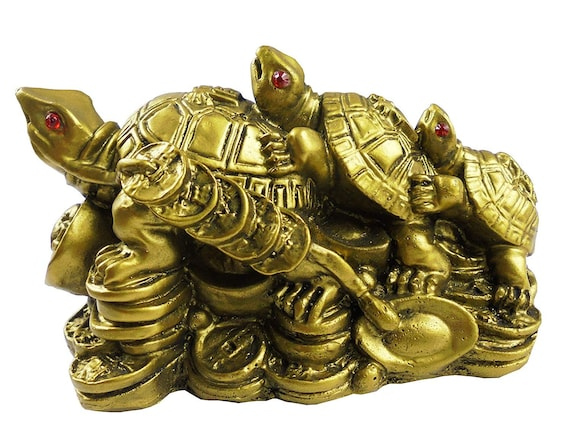
Three-shelled tortoise | Turtle with three overlapping shells | Family bonding, protection from conflict |
Tortoise with baby tortoises | Adult turtle surrounded by small ones | Fertility, family expansion, generational wealth |
Plain metal or crystal tortoise | No added symbols | General stability, career support, longevity |
A three-shelled tortoise is chosen more often for the living room than the office, since its symbolism centres on people rather than money it's meant to protect the household from arguments and outside negativity while strengthening the bond between family members.
Feng Shui Dragon Turtle: Meaning and Best Placement
The dragon turtle, commonly called the feng shui wish-fulfilling turtle, is the most requested type among business owners. This hybrid figure blends the dragon's ambition with the turtle's stability, and it's traditionally believed to bring power, success, and wealth to a business or company. It works best in the Southeast, the universal wealth corner on the Bagua map, usually shown standing on a pile of coins or ingots to reinforce the association.
Two details many buyers miss: the dragon turtle should always face into the room, never toward the main door, so the fortune it draws doesn't flow straight back out. And for career support specifically rather than general wealth, some practitioners place it in the North zone instead or position it directly behind an office chair, facing the desk, to symbolise a guardian at your back. A small coin placed in the turtle's mouth is a common activation detail for this variant.
Feng Shui Wish-Fulfilling Turtle: How to Use It
The wish-fulfilling turtle has a slightly different activation ritual compared with a standard decorative tortoise. A common practice is to write your wish on a small piece of yellow paper, place it inside the turtle, and seal it shut, then set the turtle on a piece of red cloth for added energy. Once the goal is achieved, the paper is removed and the turtle can be repositioned or used for a new intention.
Three practical steps make the wish turtle more effective:
Place it in the southeast corner of your home or office the wealth and abundance zone on the Bagua map.
Keep it facing into the room, not toward a door, so the energy it draws in stays inside the space.
Pair it with a small water feature, coin bowl, or fish tank nearby, since water energy strengthens the turtle's own element.
For a deeper look at Bagua-based dragon turtle placement, including desk and reception-area setups, this feng shui dragon turtle placement guide is a useful further read.
Lucky Tortoise for Money: Which One to Choose
If your main goal is a tortoise for money rather than health or family harmony, focus on three things together: material, direction, and companion objects. A metal or brass tortoise placed in the north, standing in a shallow bowl of water, is the most widely recommended combination for financial growth. Adding a few coins under or beside the figurine is a common variation meant to reinforce the wealth symbolism.
For career growth specifically, position the tortoise so it faces your home's main entrance from inside the northern sector. Office desks benefit from the same logic on a smaller scale: a small metal tortoise on the left corner of your desk, facing the room, is a common feng shui adjustment for career-focused professionals.
Which Tortoise Is Good for Home vs Office
Home, general stability: A plain metal or stone tortoise in the north or northeast, kept on a shelf away from the bathroom and kitchen.
Home, family harmony: A three-shelled tortoise or a tortoise with baby tortoises in the living room, facing into the seating area.
Home, better sleep: A small crystal or glass tortoise near the bed, angled toward the room rather than the pillow.
Office, business growth: A dragon turtle on a bed of coins, placed in the southeast wealth corner or behind your work chair for support.
Office, career promotion: A metal tortoise on the desk's north-facing corner, ideally near a small water bowl.
Feng Shui Kachua (Tortoise): Quick Direction Cheat Sheet
If you just want the short version the tortoise, or kachua, at a glance here's every direction from this guide in one table.
If You Want | Keep It In | Best Type / Material |
Career & wealth | North | Metal or brass tortoise, in a water bowl |
Peace & spiritual clarity | Northeast | Stone, clay, or crystal tortoise |
Business growth | Southeast | Dragon turtle (wish-fulfilling turtle) |
Family health & growth | East | Wooden tortoise |
Relationship harmony | Southwest | Crystal or wooden tortoise |
Purification & light | North, near a window | Glass tortoise |
Common Mistakes to Avoid With a Vastu or Feng Shui Tortoise
A tortoise placed incorrectly is generally considered ineffective rather than harmful, but a few mistakes come up often enough to call out directly.
Placing the tortoise in the south zone, where fire energy conflicts with its water symbolism.
Letting the water in an accompanying bowl or aquarium turn stagnant or dirty.
Facing the tortoise toward an exit, since this is believed to let positive energy leave the home.
Keeping a cracked or broken tortoise figurine, which is considered a sign of blocked or weakened energy.
Placing it directly on the floor instead of on a raised, stable surface.
Assuming a live, wild-caught tortoise is a safe or legal alternative to a figurine for native Indian species, it generally isn't.
Thinking about which corner of your next home will actually hold a north-facing shelf or a proper northeast puja corner? Layout and natural light decide how practical these placements are day to day. Browse flats in Ahmedabad and flats in Gandhinagar on Savitar Realty, or talk to our team about homes with Vastu-friendly layouts.
This article reflects Vastu Shastra and feng shui traditions, which are belief systems, not scientific or legal standards treat the directional guidance as symbolic, not a substitute for professional advice. The note on live tortoises reflects India's Wildlife Protection Act, 1972 as generally understood; laws and enforcement details can change, so confirm current status with a wildlife authority before acquiring any live animal. This is general information, not legal advice.
Everything you need before you decide.
Still have questions? Our team is here to help.
- Where should I keep a tortoise at home according to Vastu?
The north and northeast corners are the most recommended spots, since the north supports wealth and career while the northeast supports spiritual clarity. Some practitioners suggest east or southeast for health and family goals instead. Keep it on a stable table or shelf rather than the floor, and avoid the south zone completely.
- Which direction should a metal tortoise face in the home?
- Which direction should a crystal tortoise face in the office?
- Which direction is best for a glass tortoise in the office?
- How do I use a feng shui wish-fulfilling turtle?
Everything you need before you decide.
Still have questions? Our team is here to help.
- Where should I keep a tortoise at home according to Vastu?
The north and northeast corners are the most recommended spots, since the north supports wealth and career while the northeast supports spiritual clarity. Some practitioners suggest east or southeast for health and family goals instead. Keep it on a stable table or shelf rather than the floor, and avoid the south zone completely.
- Which direction should a metal tortoise face in the home?
- Which direction should a crystal tortoise face in the office?
- Which direction is best for a glass tortoise in the office?
- How do I use a feng shui wish-fulfilling turtle?