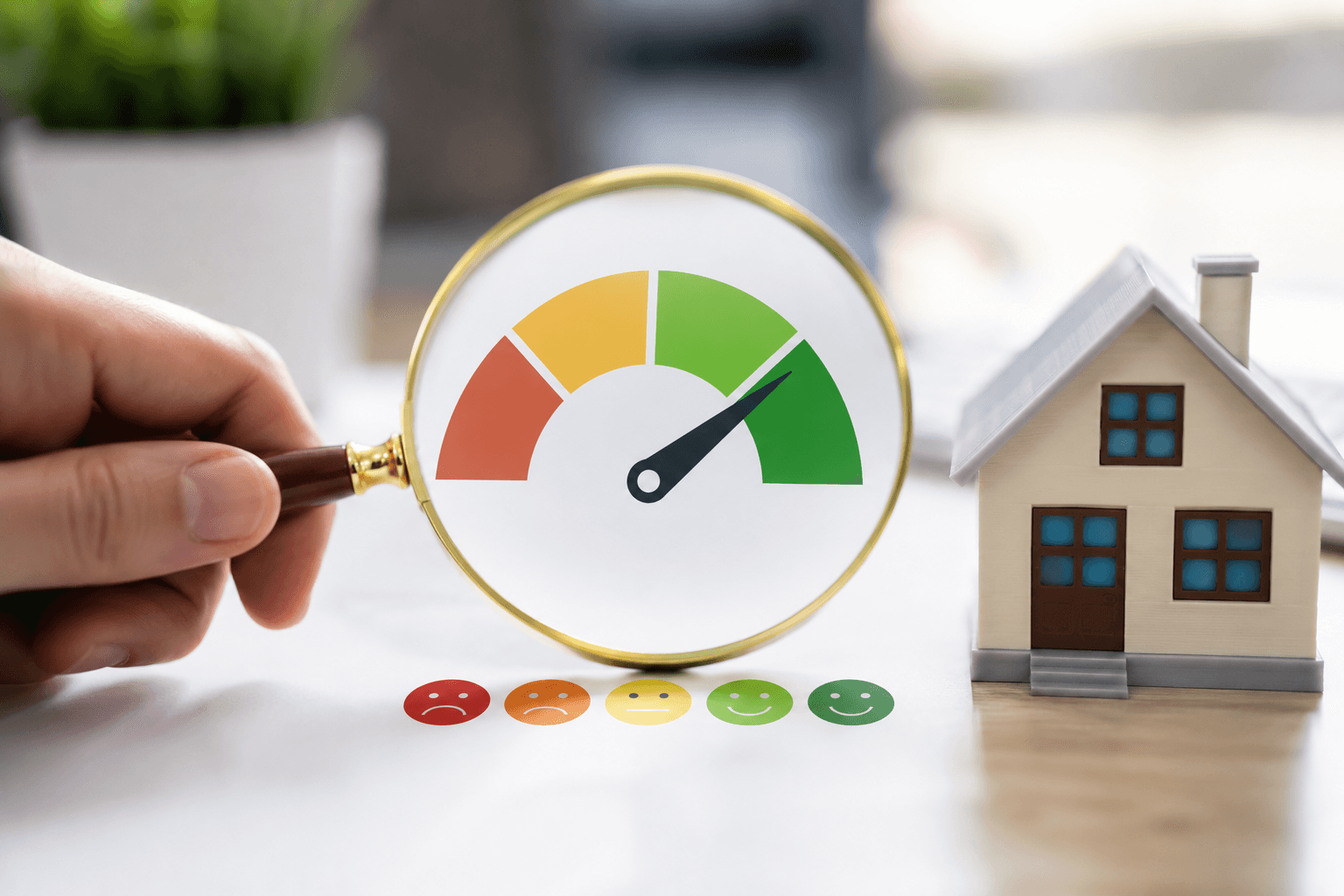
Quick answer: Most banks and NBFCs in India want a CIBIL score of 700 to 750 or higher to approve a home loan at their best interest rate. A score between 650 and 699 can still get approved, usually with a higher rate or tighter conditions attached.
Below 650, approval gets harder, though not impossible. Income stability, a co-applicant with a stronger score, or a larger down payment can still carry an application through.
If you're planning to apply for a home loan this year, your CIBIL score is probably the first thing the bank will look at, often before it even opens your income documents. This guide walks through the minimum CIBIL score required for a home loan, how lenders actually use that number, and what genuinely moves the needle if your score needs work.
What is a CIBIL Score?
A CIBIL score is a three digit number between 300 and 900. It's issued by TransUnion CIBIL, one of four credit bureaus authorised by the Reserve Bank of India, the other three being Equifax, Experian, and CRIF High Mark.
The number itself is built from your credit history. That includes how many loans and credit cards you've held, whether you've paid them on time, how much of your available credit you typically use, and how often you go looking for new credit.
A score closer to 900 tells a lender you're likely to repay on schedule. Most banks in India lean on the CIBIL score more than the other three bureaus simply because their loan processing systems were built around it first, so it's the one that shows up on almost every home loan checklist.
Understanding the CIBIL Score Required to Get a Home Loan
Home loans run long, often 15 to 30 years, so lenders want early proof that a borrower repays reliably before they get into income proof or property valuation.
Here's roughly how banks read the number:
CIBIL Score Range | What It Signals | Likely Loan Outcome |
|---|---|---|
750-900 | Excellent repayment history | Fast approval, lowest interest rates, higher loan amount |
700-749 | Good repayment history | Approval likely, competitive rates |
650-699 | Fair, some risk | Approval possible, but usually at a higher rate |
600-649 | Weak history | Harder approval, may need a co-applicant or collateral |
Below 600 | Poor history | High chance of rejection at most banks |
NH / NA | New to credit | Judged on income and employment instead |
Minimum CIBIL Score Required for a Home Loan
Here's something worth knowing upfront: the Reserve Bank of India doesn't fix a minimum credit score for home loans anywhere in its regulations. Each bank sets its own internal cut off, and those cut offs shift from time to time based on the lender's own risk appetite.
That said, current practice across most Indian lenders settles around a floor of 700, with 750 and above treated as the sweet spot for the best rates.
A rough sense of where individual lenders stand:
Lender | Typical Minimum CIBIL Score |
|---|---|
SBI | 650-699 accepted, better pricing from 700 upward |
HDFC | Around 720, sometimes 750 for specific loan variants |
ICICI Bank | 700+ preferred, some HFC arms accept lower with conditions |
Axis Bank | 650-750 treated as standard, 750+ unlocks the best deals |
NBFCs and housing finance companies | Often more flexible, occasionally below 650 with stronger income proof |
These numbers move around, so it's worth confirming directly with the lender before you apply rather than relying on any single blog, including this one.
Why Credit Score Matters for Home Loan Approval
Your score doesn't just decide a yes or no. It quietly shapes almost every term the bank offers you.
A high score usually gets you a lower interest rate, since the lender treats you as low risk. On the flip side, a weak score can tack on an extra 0.5 to 1 percent, and over a 20 year tenure that difference adds up to real money.
It also affects how much the bank is willing to lend. With a lower score, some lenders will sanction only 60 to 70 percent of the property value instead of the usual 75 to 80 percent, which means you'd need a bigger down payment out of pocket.
Beyond the numbers, a strong score usually means faster processing, fewer document back and forths, and more room to negotiate processing fees across lenders.
Connect with Savitar Realty for expert advice, verified property listings, and a hassle-free real estate experience
How to Check CIBIL Score Online for Home Loan
It's worth checking your own score before a bank does, so nothing catches you off guard mid application. Checking your own score counts as a soft inquiry, so it never brings your score down, no matter how often you check it.
Here's the full step by step checklist:
Go to the official CIBIL website
Fill in basic details
Enter PAN and date of birth
Verify identity with OTP
Answer identity verification questions
Access your score and report
Check for a bank/UPI app shortcut
Read the full report section by section (personal info, account info, payment history, enquiries)
Flag and dispute any errors
Track the dispute and follow up
Time it right, two to three months before applying
Can I Get a Home Loan With a Low CIBIL Score?
Yes, though it comes with strings attached. A low score doesn't shut the door automatically. It just pushes the lender to lean harder on everything else in your profile.
A few things that genuinely help:
Bring in a co-applicant with a strong score, like a spouse or a parent. This can lift the combined credit profile significantly.
Offer a larger down payment, which lowers the loan to value ratio and reduces the lender's exposure.
Show stable, well documented income, especially a long salary or business history.
Try NBFCs or housing finance companies, which tend to be more flexible than traditional banks on hard score cut offs.
Offer additional collateral where the lender allows it.
Government backed schemes for first time and lower income buyers are also worth checking, particularly if your issue is a thin or missing credit history rather than an actively poor one.
Factors That Influence Your CIBIL Score for a Home Loan
A few things carry most of the weight. Repayment history matters the most by a wide margin, since late EMIs, missed card payments, and defaults hit the score harder than almost anything else.
Credit utilisation is next. Using more than 30 percent of your available limit on a regular basis reads as financial strain to the scoring model, even if you're paying it off every month.
Then there's credit mix. A balance of secured loans like a car or home loan alongside unsecured credit such as cards tends to look healthier than relying on just one type.
Length of credit history plays a quieter role too. Older accounts that have been managed well add stability over time, which is part of why closing an old card can actually hurt more than help.
Lastly, a burst of recent credit enquiries, applying for several loans or cards in a short window, tends to pull the score down for a while, since it reads as someone actively chasing credit.
How to Improve Your CIBIL Score for a Home Loan Fast
If your score needs work, the following steps tend to show results within a few months rather than years.
Pay every EMI and card bill on time. Auto debit helps if due dates slip your mind. This one habit has the single biggest impact.
Keep card usage under 30 percent of your limit. If you're regularly close to the max, either pay it down faster or ask for a limit increase without spending more.
Don't apply for several loans or cards back to back. Each hard enquiry dents the score a little, and a cluster of them compounds that effect.
Leave old credit cards open. A longer credit history generally helps, even on a card you barely use.
Pay down existing debt, particularly high interest credit card balances, before you apply.
Go through your report line by line and dispute anything wrong. Fixing a wrongly reported default is often the fastest single fix available.
Most borrowers who stay disciplined for 6 to 12 months see a borderline score move into a comfortably approvable range.
What is a Good CIBIL Score for a Home Loan?
A score of 750 or above is generally treated as the best CIBIL score for a home loan. At that level, most lenders open up their lowest rates, quicker approvals, and higher loan amounts.
A score between 700 and 749 is still good and gets approved at most banks, just with slightly less room to negotiate. Between 650 and 699, a loan is workable, but expect to pay a bit more in interest for it.
What Are the Benefits of a Good CIBIL Score for Home Loans?
A strong score works in your favour in more ways than most people realise:
Lower interest rates, which save a meaningful amount over a long tenure
Higher loan eligibility and sanctioned amount
Faster approval with less back and forth on documentation
Real leverage to negotiate processing fees and terms
A wider set of lenders willing to compete for your application
Smoother approval later on, whether that's a top up loan or a new credit card
Mistakes Which Can Spoil Your Credit Score
A few habits quietly do the most damage, even to people who think of themselves as financially careful:
Paying EMIs or card bills a few days late, even occasionally
Running credit cards close to their limit month after month
Settling a loan instead of closing it in full. A "settled" tag reads worse than a properly closed account
Applying for multiple loans or cards within a short stretch
Standing as a guarantor and losing track of whether that person is actually repaying
Never checking your own credit report for errors or fraudulent entries
Closing your oldest credit card, which shortens your average credit history overnight
This article reflects typical home loan lending practice in India as of 2026 and is meant for general information. Actual eligibility criteria, minimum CIBIL score requirements, and interest rates differ by lender and change over time, so always confirm current terms with your bank or housing finance company directly. For regulatory context on credit information companies, refer to the Reserve Bank of India.
Planning to buy a home in Ahmedabad or Gandhinagar? Once your CIBIL score and home loan are sorted, the next step is finding the right property. Explore verified residential projects, compare floor plans, and get local guidance at Savitar Realty.