Residential/Group Housing
7 Horse Painting Vastu: Direction, Placement, Benefits & Meaning
25 July 2026
254 Views
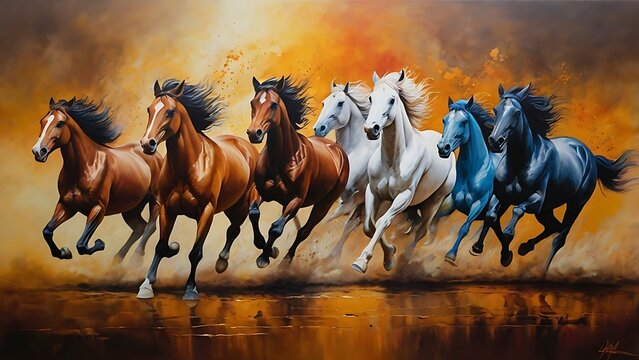
A 7 horse painting is one of the most popular Vastu remedies used in Indian homes and offices. According to Vastu Shastra, seven running horses represent speed, success, progress, strength, and continuous growth. But hanging just any horse painting isn't enough — its direction, placement, colours, background, and even which way the horses face all influence the energy it's believed to bring.
This guide covers the correct 7 horse painting Vastu direction, the best rooms for it, ideal colours, common mistakes, and the mythological origin of why the number is seven not five, not ten.
What Is a 7 Horse Painting in Vastu Shastra?
In Vastu Shastra, symbols are used to represent specific energies — just as plants represent growth and flowing water represents abundance, running horses symbolise movement, determination, and success.
A painting of seven horses running together is believed to encourage steady progress in life. That's why it's a common sight in homes, offices, boardrooms, and commercial spaces. Unlike decor chosen purely for looks, a 7 horse painting is usually picked with intention to create a positive environment and keep people motivated toward their goals.
Vastu is a traditional belief system, not a scientifically tested one. Many people find genuine symbolic value in it, but it works best as a complement to practical decision-making, not a replacement for it.
Why the Number Seven Matters — The Surya Dev Connection
Most articles on this topic gloss over why it's seven horses. There's an actual mythological root, and it's worth knowing.
In Hindu mythology, the Sun God Surya rides a golden chariot pulled by seven horses, with Aruna the god of dawn as his charioteer. This isn't a minor folk detail; it's referenced in the Rigveda and is central to Ratha Saptami, the Hindu festival marking Surya's chariot turning toward the northern hemisphere (Uttarayana).
The seven horses are traditionally said to represent the seven colours of the rainbow, and also the seven days of the week, starting with Sunday — the day of the Sun God, Surya.
This is where the number's significance in Vastu actually comes from — not an arbitrary "lucky number," but a solar and cosmic symbol of continuous motion, time, and energy. It's also why 7-horse art is so often paired with a sunrise background rather than any other time of day: the horses are, symbolically, the sun's own steeds.
Other cultural associations reinforce the number's weight in Indian tradition:
Seven days in a week
Seven colours of the rainbow
Seven musical notes (swaras)
Seven sacred vows (Saptapadi) in a Hindu wedding
Seven chakras in yogic philosophy
Together, these associations are why seven horses — not any other number — became the standard in Vastu-oriented art. For general background on how Vastu Shastra developed as a design tradition, see Vastu Shastra on Wikipedia; for the Surya Dev/Ratha Saptami connection specifically, see Ratha Saptami.
What the Running Horses Symbolise
Running horses have represented strength and momentum across cultures for centuries. In Vastu, seven running horses are commonly associated with:
Continuous growth and career advancement
Financial progress and confidence
Leadership and determination
Positive energy and teamwork
The horses are usually shown running together in the same direction — this represents unity and focused effort. A painting where horses appear scattered, tired, injured, or moving in different directions is generally avoided, since it symbolises confusion rather than progress. The expression and movement of the horses matter just as much as the count.
Does Every 7 Horse Painting Work?
Not automatically. Many buyers grab the first painting they find online without checking the details. For a painting to align with traditional Vastu recommendations, it should have:
Seven horses only, all clearly visible
All horses running in the same direction
Healthy, energetic-looking horses
A clean, pleasant background
No signs of injury, struggle, or conflict
Paintings with mountains, storms, broken landscapes, or incomplete horse figures may look artistic, but they're generally not the right pick if you're buying specifically for Vastu.
Is There Scientific Evidence Behind 7 Horse Painting Vastu?
No, there's no scientific evidence that a 7 horse painting changes luck, wealth, or career outcomes. The belief comes from traditional Vastu principles, where colours, directions, symbols, and layout are thought to influence a space's energy.
From a practical standpoint, though, artwork genuinely affects mood. A vibrant painting of powerful, energetic horses can lift a room's atmosphere, while dull or negative imagery does the opposite. Whether you follow Vastu for spiritual reasons or simply like the symbolism, a 7 horse painting combines attractive décor with meaningful cultural weight.
7 Horse Painting Vastu Direction: The Complete Guide
The most common question is simple: "Which direction is best for a 7 horse painting?" The honest answer is that it depends on what you're trying to achieve — different Vastu experts recommend different directions because they're solving different goals.
Direction | Best For | Associated With |
South | Career advancement, business owners, leadership roles | Fame, recognition, public reputation |
East | New businesses, recent moves, fresh starts | Growth, optimism, new beginnings |
North | Financial professionals, entrepreneurs, consultants | Wealth, prosperity, career opportunities |
South Direction — Fame & Recognition
The south wall is the most widely recommended location in Vastu for a 7 horse painting. This direction is associated with reputation, confidence, leadership, and public recognition making it a common pick for entrepreneurs, professionals, and anyone chasing a promotion. Many corporate offices display running-horse art in reception areas or meeting rooms for exactly this reason.
East Direction — Growth & New Beginnings
East represents fresh opportunities and optimism. If you've recently started a business, moved into a new home, or begun a new life phase, the east wall is often recommended. It's also the direction that receives the morning sun a natural pairing with a sunrise-themed painting.
North Direction — Wealth & Career
North is associated with prosperity and business opportunity in Vastu Shastra. It's commonly chosen by business owners, financial professionals, and working professionals looking to strengthen career or financial stability. The idea isn't that the painting creates wealth on its own it symbolises continuous movement toward it.
Why Vastu Experts Disagree on Direction (and How to Choose)
If you've searched this topic before, you've likely seen one site say south, another say east, and a third insist on north. All three are "correct" in the sense that different practitioners weight different principles — the purpose of the painting, the room's layout, the wall's actual direction, and the property's overall Vastu.
Instead of chasing a single universal rule, match the direction to your goal:
Career growth or recognition? South is the most common recommendation.
Fresh opportunities or personal development? East is generally suggested.
Business expansion or financial growth? North is another strong option.
If your home has practical layout limits, a clean, well-lit wall in a supported direction is a better choice than forcing the painting into an awkward spot just to satisfy one interpretation.
Related Blog
east facing house Vastu
north facing house Vastu
west-facing house Vastu
Directions to Avoid
Most Vastu practitioners advise against:
The south-west corner, associated with stability rather than movement
Directly opposite the main entrance, where symbolic energy is believed to flow out of the house
Walls facing cluttered or poorly maintained areas
Dark corners where the artwork isn't clearly visible
Which Way Should the Horses Face?
This detail causes as much confusion as the wall direction itself. The general rule: the horses should appear to be running into the room, not away from it.
For example, if the painting sits on the south wall, the horses should visually move toward the room's centre — not toward a door, balcony, or window, which creates the impression of energy leaving the space. The symbolism is straightforward: you want opportunity and progress moving into your home, not out of it.
Beyond direction, check the artwork itself: all seven horses should be clearly visible, running together, with energetic, healthy expressions — none isolated or injured. Harmony in the composition matters more than dramatic or aggressive imagery.
Best Rooms to Hang a 7 Horse Painting
Living Room
Widely regarded as the best spot. As one of the home's most active spaces, the painting naturally becomes a focal point while carrying its symbolic weight for the whole household.
Office or Business Space
Common in reception areas, conference rooms, director cabins, and general workspaces, since the imagery represents ambition, leadership, and teamwork. For office use, choose a professional-looking painting with a calm background over anything overly dramatic.
Main Entrance: Yes or No?
This is one of the biggest myths around horse paintings. Some believe it should hang directly above the main door; others advise strongly against it. There's no universally accepted Vastu rule supporting entrance placement. If you do place it near the entrance, make sure the horses don't appear to be running out of the house. For most homes, the living room remains the safer, more commonly recommended spot.
Read More: Vastu for home entrance guide
Can You Hang It in the Bedroom? (Why Not)
Generally, no. A bedroom exists to promote relaxation and rest, while running horses represent speed, action, and constant movement — qualities that clash with a calm sleeping space. Most Vastu practitioners recommend softer, more peaceful imagery for bedrooms instead.
Rooms to Always Avoid
Bathrooms, kitchens, store rooms, laundry areas, dark passageways, and cluttered rooms don't align with the painting's positive symbolism and are generally skipped.
Best Colours for a 7 Horse Painting
White Horses — Peace & Purity
Seven white horses are the most popular choice by far. White represents purity, peace, and clarity, and pairs naturally with almost any interior style. If you're buying your first 7 horse painting and aren't sure which design to pick, white is the safest option.
Brown & Black Horses — Stability & Authority
Brown horses suggest stability, reliability, and endurance — good for offices or study rooms where you want a grounded, professional feel. Black horses symbolise strength and authority, though an all-dark composition can make a room feel visually heavy; balance it with a bright background if you go this route.
Best Background Colours
Favour soft blue skies, golden sunlight, green landscapes, open fields, and clean natural scenery — these create a sense of openness and movement. Avoid storms, heavy rain, dark forests, fire, violent waves, or gloomy skies; artistic as they may look, they work against the positive symbolism most buyers want.
7 Horse Painting With Sunrise: Meaning & Benefits
The sunrise-background version is the most searched variant of this artwork, and given the Surya Dev connection covered earlier, that's not a coincidence — the rising sun represents hope, fresh beginnings, and confidence, which pairs naturally with seven horses in motion.
Sunrise vs Sunset vs Ocean Backgrounds
Background | Vastu Reading | Recommended? |
Sunrise | New beginnings, growth, fresh opportunity | Yes, most commonly recommended |
Sunset | Signifies an ending, the close of a day | Generally avoided for symbolic art |
Calm ocean | Peaceful, balanced energy | Yes, if the water is calm |
Rough seas/storms | Instability rather than steady progress | Avoided |
Benefits of a 7 Horse Painting
These are traditional Vastu beliefs, not scientific claims — but they're the reasons the painting remains popular:
Career & business growth — the imagery is a visual reminder to stay focused and keep moving toward long-term goals.
Wealth & financial prosperity — continuous movement is linked symbolically with opportunity; the painting itself doesn't create wealth, but represents the consistency needed to build it.
Motivation & positive energy — a vibrant, energetic scene tends to lift a room's mood more than dull or negative imagery.
Family harmony — placed in a shared living space, the seven horses moving together symbolise cooperation and shared goals within a family.
How to Choose the Right 7 Horse Painting
Frame Material — Wood vs Metal
Wood gives a warm, timeless look that blends into most home interiors. Metal frames suit modern offices better, provided the overall composition stays balanced. Whichever you pick, make sure the frame is sturdy and proportionate to the artwork.
Ideal Size & Hanging Height
Fit the size to the wall rather than letting it dominate the room. Hang it at roughly eye level, and avoid placing it too close to the ceiling or crammed above bulky furniture.
Canvas vs Wallpaper vs Sculpture
Canvas remains the most popular format — durable, premium-looking, and suited to both traditional and modern interiors. Wallpaper works as a decorative feature wall but is less commonly recommended for strict Vastu use. Sculptures follow entirely different placement rules than wall art, so stick with a framed canvas if Vastu compliance is your priority.
7 Horses vs Other Horse Paintings
7 Horse vs 8 Horse Painting
The 7 horse painting is by far the more popular choice in Indian Vastu, symbolising balanced growth and steady progress. An 8 horse painting is far less common in Vastu Shastra — the number eight carries more weight in Feng Shui traditions than in Indian Vastu, so if you're following Indian principles specifically, seven remains the standard.
3 Horse Painting Meaning
A three-horse painting generally represents courage, determination, and personal ambition. It's a fine decorative choice, but it doesn't carry the same traditional Vastu significance as seven running horses — most practitioners still favour seven for dedicated Vastu use.
Common Mistakes to Avoid
Buying any horse painting without checking details — confirm all seven horses are visible, running together, and look healthy and unseparated.
Choosing dark or negative artwork — storms, battles, or gloomy landscapes work against the symbolism you're going for.
Hanging it in the wrong room — living rooms, offices, and reception areas work; bathrooms, kitchens, storage rooms, and bedrooms generally don't.
Ignoring the rest of your interior — the painting should complement your wall colour, furniture, and lighting, not clash with them.
Treating it as a shortcut to success — it's a symbol of motivation, not a substitute for planning, effort, or sound financial decisions.
Vastu vs Feng Shui: Do the Rules Differ?
Yes. Vastu Shastra is an ancient Indian architectural system built around directions, natural elements, and spatial planning. Feng Shui, from China, focuses instead on the flow of Qi (energy) through object placement and the balance of five elements.
That's why you'll find different recommendations online for the number of horses, preferred directions, and colours depending on which tradition a source is drawing from. If you're decorating a home in India under Vastu, it's generally better to follow Vastu principles consistently rather than blending guidance from both systems.
Final Thoughts
A 7 horse painting has stayed popular for generations because it blends genuine symbolism with timeless design. Whether you follow Vastu closely or simply like the artwork, a well-chosen painting can become a striking focal point in your home or office.
If you're buying one, don't focus on direction alone pay equal attention to the quality of the artwork, the horses' expressions, the background, the room, and how well it fits your existing interior. And remember: Vastu should support a well-planned home, not replace practical decisions. Good lighting, proper ventilation, smart space planning, and solid construction will always matter more to your daily life than any single piece of décor.
Planning a home where you can put these Vastu principles into practice? Browse verified residential projects across Ahmedabad and Gandhinagar on Savitar Realty, or explore live listings — flats in Gandhinagar and flats in Ahmedabad to find a layout that works for both your family and your Vastu preferences.
Everything you need before you decide.
Still have questions? Our team is here to help.
- Which direction is best for a 7 horse painting?
South, east, and north are the most commonly recommended, depending on your goal — south for recognition, east for growth, and north for career and financial opportunities.
- Where should a 7 horse painting be placed?
- Can I keep a 7 horse painting in the bedroom?
- Which colour horse painting is best?
- Is a sunrise background better than a sunset?
Everything you need before you decide.
Still have questions? Our team is here to help.
- Which direction is best for a 7 horse painting?
South, east, and north are the most commonly recommended, depending on your goal — south for recognition, east for growth, and north for career and financial opportunities.
- Where should a 7 horse painting be placed?
- Can I keep a 7 horse painting in the bedroom?
- Which colour horse painting is best?
- Is a sunrise background better than a sunset?